Our Sponsors













Thank you for your support of S.L.E.A.
Archives: News
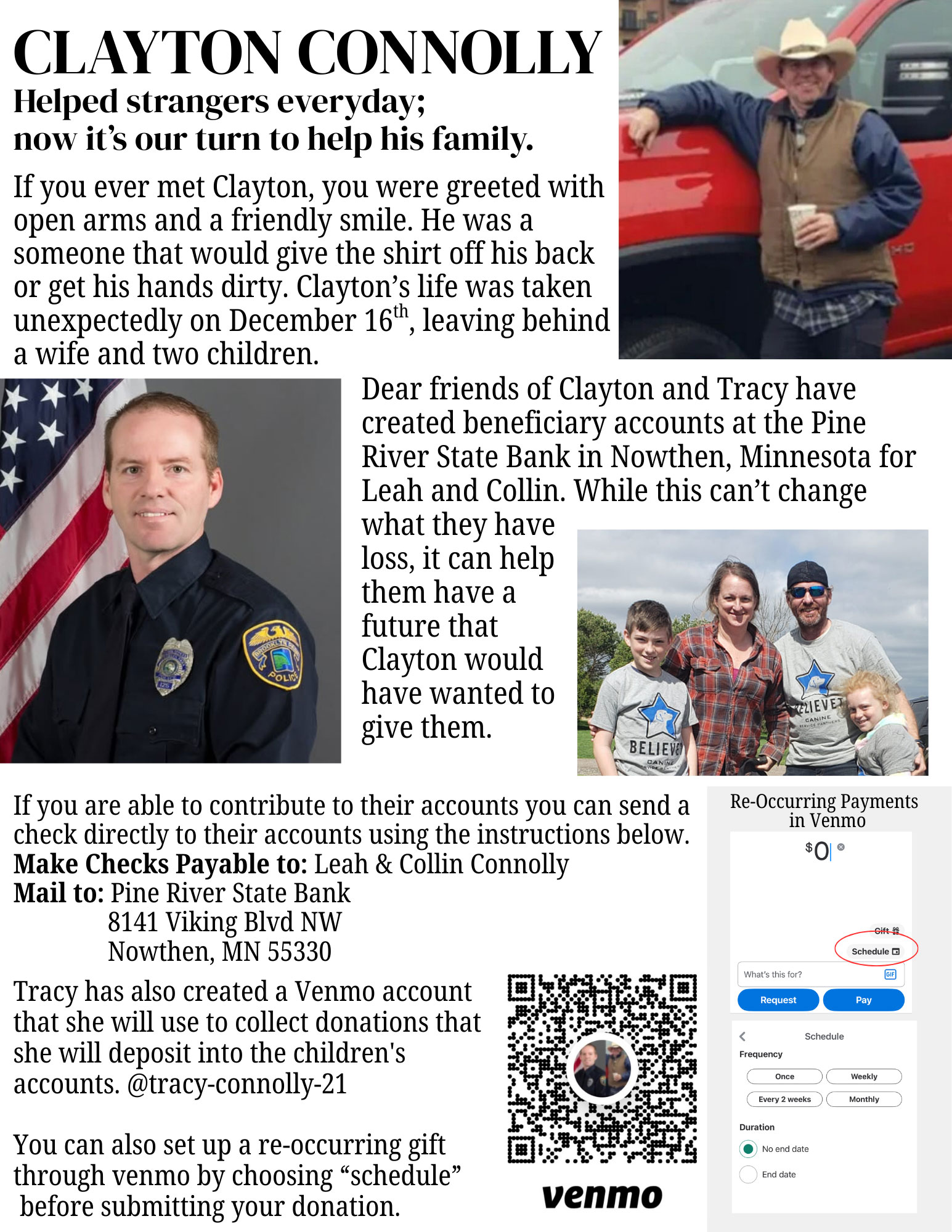
Why Do Roadside Samaritans Face Deadly Risks? A Officer’s Story
Read the full article here: Why Do Roadside Samaritans Face Deadly Risks? A Officer’s Story
In a world increasingly defined by self-interest and disconnection, the tragic death of retired Brooklyn Park police officer Clayton Connolly stands as a powerful reminder of what genuine service to others truly means. Connolly’s final act—stopping on an icy road to help a stranded motorist—wasn’t an anomaly in his life but rather the culmination of a lifetime dedicated to putting others first. His death should force us to examine what we value as a society and how we honor those who embody the highest ideals of community service.
The circumstances of Connolly’s passing reveal an uncomfortable truth: our culture often celebrates self-promotion and individual achievement while taking for granted the quiet heroes who form the backbone of our communities. These individuals don’t seek recognition but instead find purpose in meeting the needs of others—even strangers—often at great personal risk.
The Fading Value of Selfless Service in Modern Society
Clayton Connolly’s approach to life—characterized by constant vigilance for opportunities to help others—represents a value system that appears increasingly rare. In an era where social media rewards performative acts of kindness designed for maximum visibility, Connolly’s genuine service ethic stands in stark contrast. His colleague Officer Ploumen noted that Connolly’s death reflected exactly how he lived: helping random strangers was something “he would do 100 times over.”
This dedication to service without expectation of reward or recognition is becoming endangered in our hyperindividualistic society. The 2022 American Perspectives Survey found that only 13% of Americans report helping strangers on a regular basis—down from 27% in 2012. Meanwhile, a Harvard University study revealed that while 90% of young adults believe helping others is important, only 25% ranked it among their top three life goals.
Connolly’s life challenges us to consider what we’re losing as a society when we fail to cultivate and celebrate genuine service. The Brooklyn Park Police Department described his “indomitable spirit and complete selflessness”—qualities that benefit communities immeasurably but often go unrecognized until tragedy strikes.
Community Policing at Its Core: Relationship Over Authority
Connolly’s approach to policing offers a powerful model at a time when trust between law enforcement and communities remains strained. His 15-year career and subsequent retirement behavior demonstrate a form of community policing built on genuine relationships rather than authority. The fact that “he knew just about everyone in Nowthen” and remained connected to the community long after retirement speaks to a policing philosophy centered on human connection.
This approach stands in contrast to more militarized or detached models of policing. Research from the Police Executive Research Forum shows that officers who maintain strong community connections have significantly better outcomes in crisis situations and higher levels of public trust. A 2023 Gallup poll found that in communities where residents personally know local officers, approval ratings for police are 37% higher than in communities where such relationships are absent.
Connolly’s legacy challenges police departments nationwide to consider how they might foster deeper community integration. His effectiveness stemmed not from his authority but from his authentic presence in the community—stopping “to BS at a local business” and serving as the neighborhood’s unofficial watchman. These seemingly small interactions build the social fabric that makes communities safer and more resilient.
The Hidden Cost of Bystander Culture
Perhaps the most challenging aspect of Connolly’s story is how it exposes our collective retreat from intervention. While Connolly stopped to help a stranded motorist without hesitation, research indicates this behavior is becoming increasingly exceptional. A 2021 study in the Journal of Personality and Social Psychology found that bystander intervention rates have declined by approximately 31% since the 1980s.
This retreat from involvement carries significant social costs. Communities where residents regularly intervene to help others report lower crime rates, faster emergency response times, and higher measures of collective well-being. The declining willingness to get involved—whether due to fear of liability, concern for personal safety, or simple indifference—erodes the invisible infrastructure of mutual aid that communities need to thrive.
Connolly’s death while helping another person raises difficult questions about risk and responsibility. Some might argue that his actions were unnecessarily dangerous—that in icy conditions, he should have simply called emergency services rather than stopping himself. This perspective has merit from a pure safety standpoint, but it misses the deeper human truth that Connolly understood: immediate help from a fellow human being often makes all the difference in crisis situations.
Alternative Viewpoints: The Limits of Individual Heroism
Some would argue that celebrating individual acts of heroism like Connolly’s distracts from the need for systemic solutions. This view suggests that rather than expecting citizens to put themselves at risk helping stranded motorists, we should invest in better emergency response systems, improved road safety measures, and more comprehensive roadside assistance programs.
This perspective has validity—systems and infrastructure certainly matter. The Department of Transportation reports that properly funded emergency response systems can reduce roadside fatalities by up to 40%. However, no system can fully replace the immediate human response that Connolly provided. Even the most efficient emergency services typically take minutes to arrive, while a passing good Samaritan can offer immediate assistance.
Others might suggest that Connolly’s actions, while admirable, reflect a problematic aspect of police culture that encourages officers to take unnecessary risks. This view fails to recognize that Connolly’s behavior wasn’t about heroics or adrenaline-seeking but about a deeply ingrained ethic of service that transcended his professional role. His actions that morning weren’t performed as a police officer—he had been retired for nearly a decade—but as a citizen who couldn’t pass by someone in need.
Honoring Service Through Action, Not Just Words
The outpouring of support for Connolly’s family through the GoFundMe campaign demonstrates that communities still recognize and value selfless service. However, truly honoring Connolly’s legacy requires more than financial contributions or expressions of gratitude—it demands that we examine how we might incorporate his service ethic into our own lives.
The most meaningful tribute to Clayton Connolly would be a community-wide recommitment to the values he embodied: vigilance for opportunities to help, willingness to inconvenience ourselves for others, and consistent investment in community relationships. This might mean stopping to help a stranded motorist (with appropriate safety precautions), checking on elderly neighbors during extreme weather, or simply being present and engaged in community life rather than retreating into private spaces.
Connolly’s life and death remind us that community safety and well-being don’t primarily come from institutions or systems but from individuals who consistently choose to serve others. His legacy challenges us to be those individuals—to live in such a way that our deaths, whenever they come, would reflect exactly how we lived.
Clayton Connolly
Retiree MPPOA Legal Defense Fund
As a retired member of the MPPOA you are eligible to join the Legal Defense Fund. The MPPOA Legal Defense Fund is here to protect your freedom and the right to defend yourself and financial assets. You will have 24 hour access to the same MN attorney panel as active law enforcement, administered by MN trustees. Legal representation in any civil or criminal action brought against the individual arising from the use of a firearm in defense of self or others where an imminent threat of serious bodily harm to self or others is present.
Download the Retiree LDF Flyer for more information.
Support Ty Schmidt’s Battle Against Cancer

Help support Ty Schmidt’s battle against cancer by donating to his Go Fund Me page: https://www.gofundme.com/f/support-ty-schmidts-battle-against-cancer
SLEA Charitable Golf Tournament – Thank You!
Thank you for attending the 2024 SLEA SLEA Charitable Golf Tournament!
MPPOA OFFERS RETIRED PEACE OFFICERS “LEGAL DEFENSE FUND PLAN”.
Minnesota Police & Peace Officers Association offers retired peace officers the “Legal Defense Fund Plan”. Call Angie Itschert, MPPOA, at phone: 651-291-1119 or email: info@mppoa.com.
Members Change of Address or Email Address
MPPOA Now Offers Retired Police Officers “Legal Defense Fund Plan”
Minnesota Police & Peace Officers Association now offers retired police officers the “Legal Defense Fund Plan”. Call Angie Itschert, MPPOA, at 651-291-1119 or email: info@mppoa.com.
SLEA School Patrol Appreciation Days: May 6-7, 2026
The SLEA School Patrol Appreciation Days will be held at Nickelodeon Universe, Mall of America, on May 6th, 2026 and May 7th, 2026 from 10:00AM until 3:00PM. You may register online and make payment or mail your registration form and check to SLEA. The registration form will be mailed out to the local law enforcement agencies. Participants may register and make payment online by clicking one of the links below.
The SLEA will again provide each School Patrol Member and Chaperone with a special Nickelodeon Universe wristband. This special wristband will allow you to enjoy UNLIMITED free rides from 10:00am until 3:00pm.
The price of this year’s event will be $10.00 per wristband.
The transportation to and from Nickelodeon Universe is the responsibility of each respective school and/or Law Enforcement agency. Lunch is on your own.
ONLINE REGISTRATION:
CLICK HERE to register online for Wednesday, May 6th 2026.
CLICK HERE to register online for Thursday, May 7th 2026.
DOWNLOAD REGISTRATION FORMS:
CLICK HERE to download the registration form for Wednesday, May 6th 2026.
CLICK HERE to download the registration form for Thursday, May 7th 2026.